AKER, BERLIN, GERMANY 2024
POLLINATOR PATHMAKER
Gardens are hybrids of public and private spheres. As part of the landscape, they communicate values, cultural norms and power structures. As part of home, they meet our need for restoration — gardens are places of domestic activity, acts of care, and refuge. In a city like Berlin, public green spaces fill these roles. Urban gardens provide oxygen, counteract temperature increase, and contribute to biodiversity. As places of recreation and community, they greatly contribute to our personal wellbeing and societal resilience.
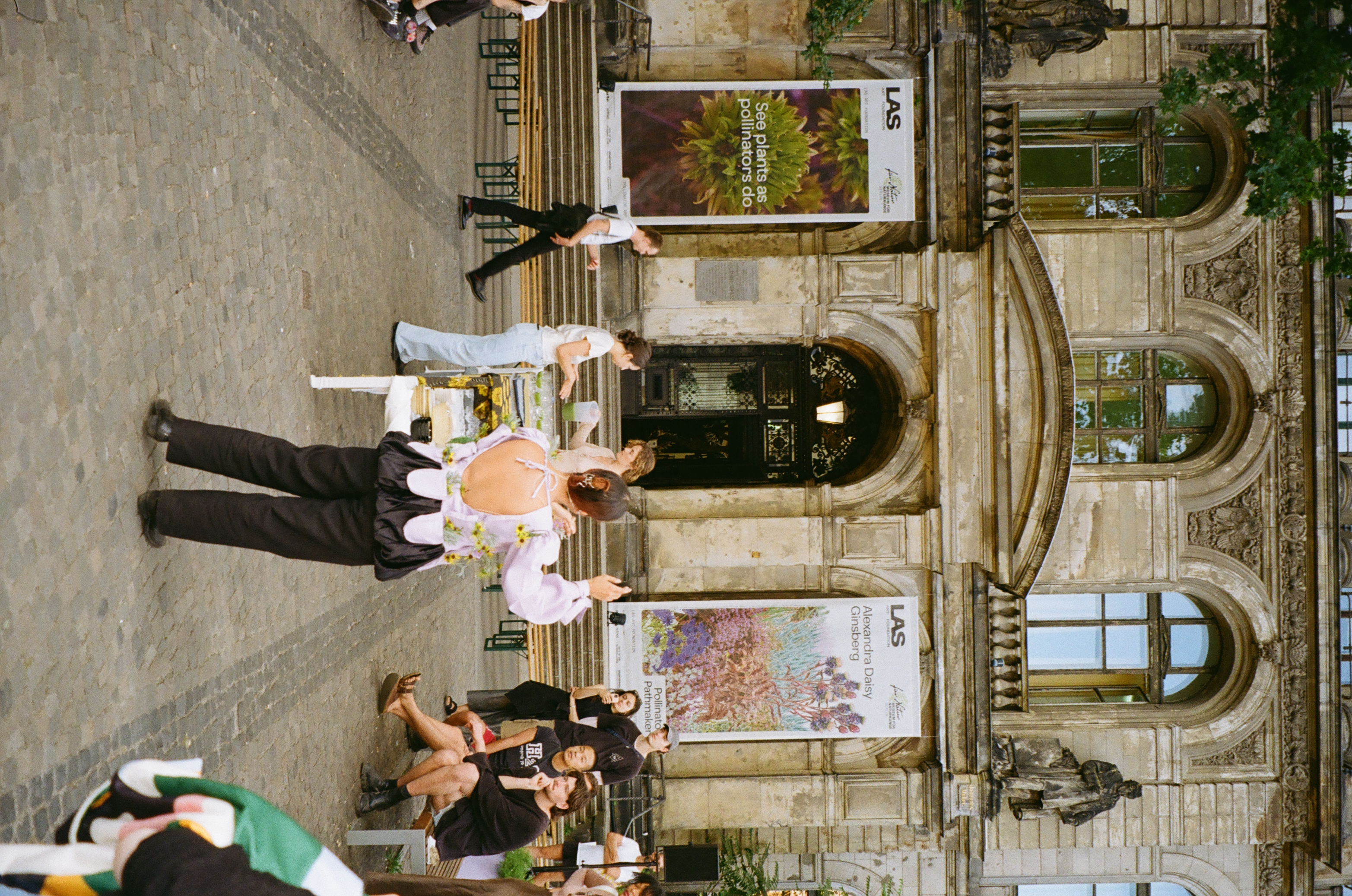
Pollinator Pathmaker, by Alexandra Daisy Ginsberg, brings attention to gardens as both shared spaces
and infrastructures that connect us to human and non-human others. Each Edition of the artwork — be it a large public garden or small DIY Edition — is linked to adjacent green space through the pollinators that travel from one plot to the next. Yet by making their pathways visible, the
living artwork also reveals gaps in the networks of nurture that pollinators depend on. Pollinator Pathmaker raises vital questions about access to and agency within urban greenery. The artwork points to empathy as a central figure in shaping future public spaces, which, by making them more inclusive, might end up benefiting everyone.
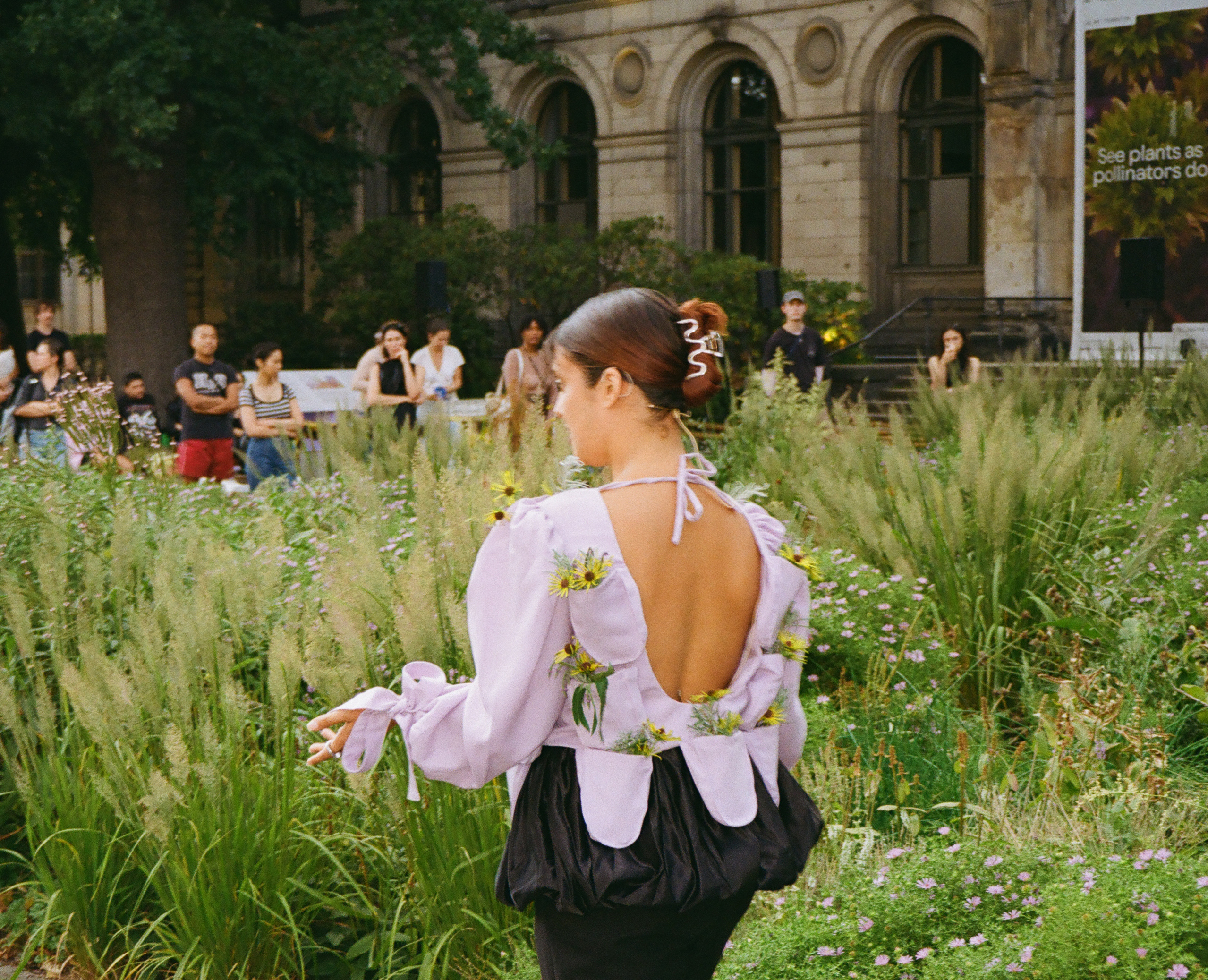
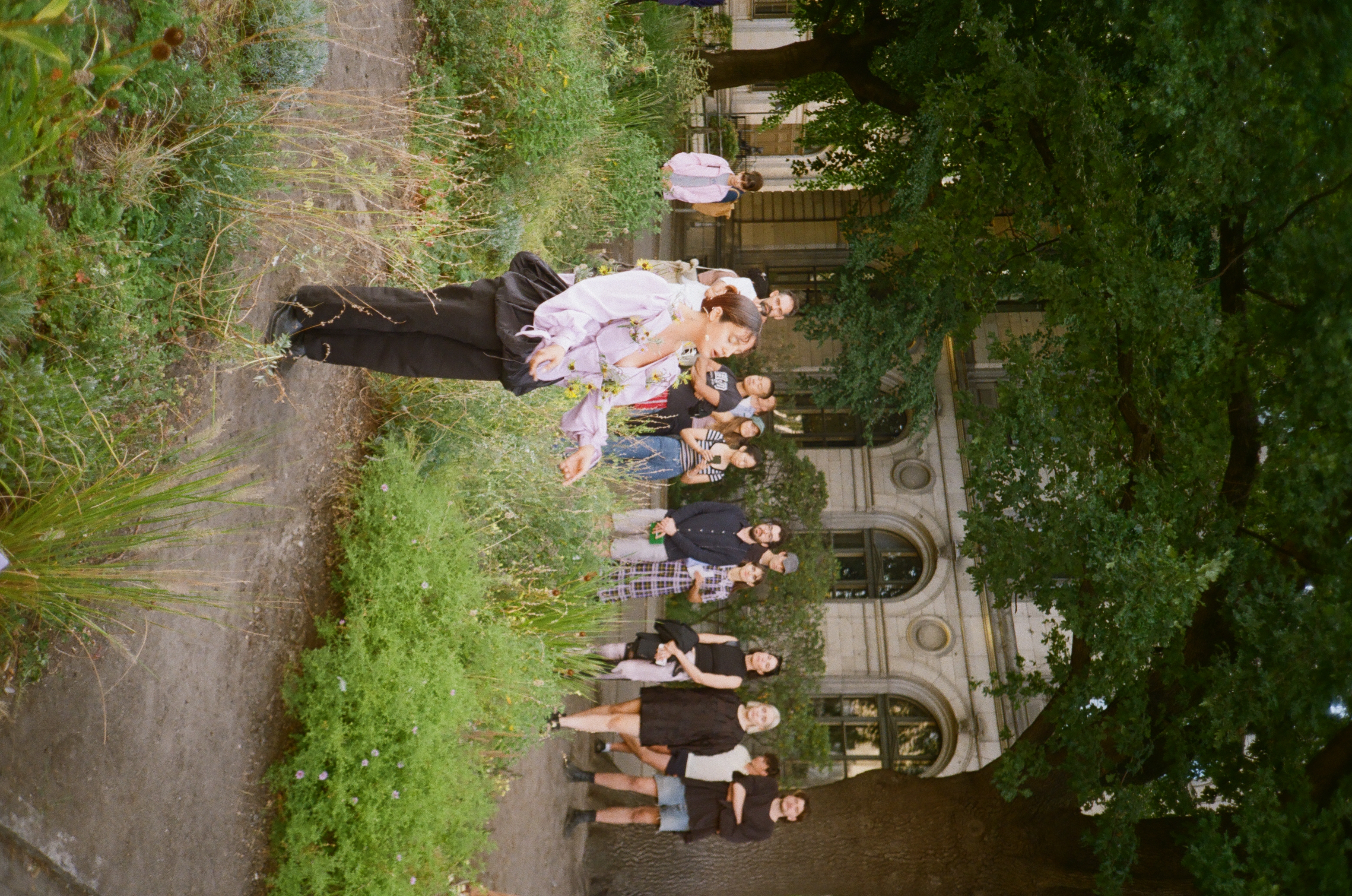
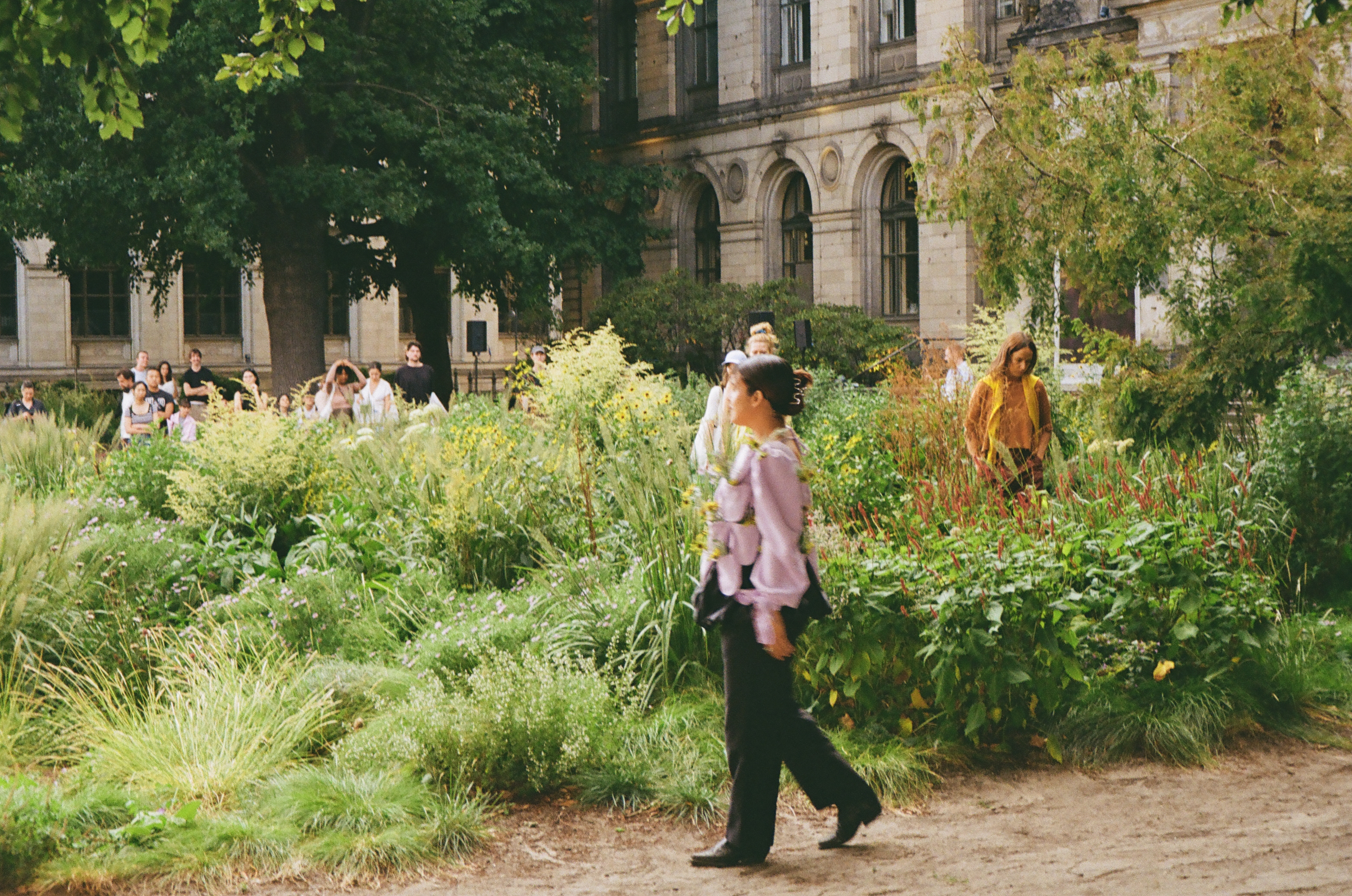
As part of the project, Luïza Luz presented a sound and lecture performance that interweaves auditory landscapes with reflections on monoculture, and eco-liberation, and participated in the panel discussion with LAS curators Agnessa Schmudke and Sophie Korschildgen, the guests Babette Werner and Toni Karge.
Gardens are hybrids of public and private spheres. As part of the landscape, they communicate values, cultural norms and power structures. As part of home, they meet our need for restoration — gardens are places of domestic activity, acts of care, and refuge. In a city like Berlin, public green spaces fill these roles. Urban gardens provide oxygen, counteract temperature increase, and contribute to biodiversity. As places of recreation and community, they greatly contribute to our personal wellbeing and societal resilience.
Pollinator Pathmaker, by Alexandra Daisy Ginsberg, brings attention to gardens as both shared spaces
and infrastructures that connect us to human and non-human others. Each Edition of the artwork — be it a large public garden or small DIY Edition — is linked to adjacent green space through the pollinators that travel from one plot to the next. Yet by making their pathways visible, the
living artwork also reveals gaps in the networks of nurture that pollinators depend on. Pollinator Pathmaker raises vital questions about access to and agency within urban greenery. The artwork points to empathy as a central figure in shaping future public spaces, which, by making them more inclusive, might end up benefiting everyone.
As part of the project, Luïza Luz presented a sound and lecture performance that interweaves auditory landscapes with reflections on monoculture, and eco-liberation, and participated in the panel discussion with LAS curators Agnessa Schmudke and Sophie Korschildgen, the guests Babette Werner and Toni Karge.